
Decision
What to check before hiring a renovation company
Hiring a renovation company is a decision that combines trust and verification. This guide brings together the points worth clarifying before signing any proposal, whoever presents it.

Written scope
The first document to ask for is not the price, it's the description of what will be done. A written scope identifies each area to be worked on, the planned tasks and, where applicable, the materials or finishes considered. Without this basis, comparing proposals becomes unreliable, because two companies may be pricing different things without it being obvious at first glance.
It's worth confirming whether the scope explicitly states what's excluded — for example, furniture, appliances or work in other trades that the client may need to arrange separately.
Detailed quote
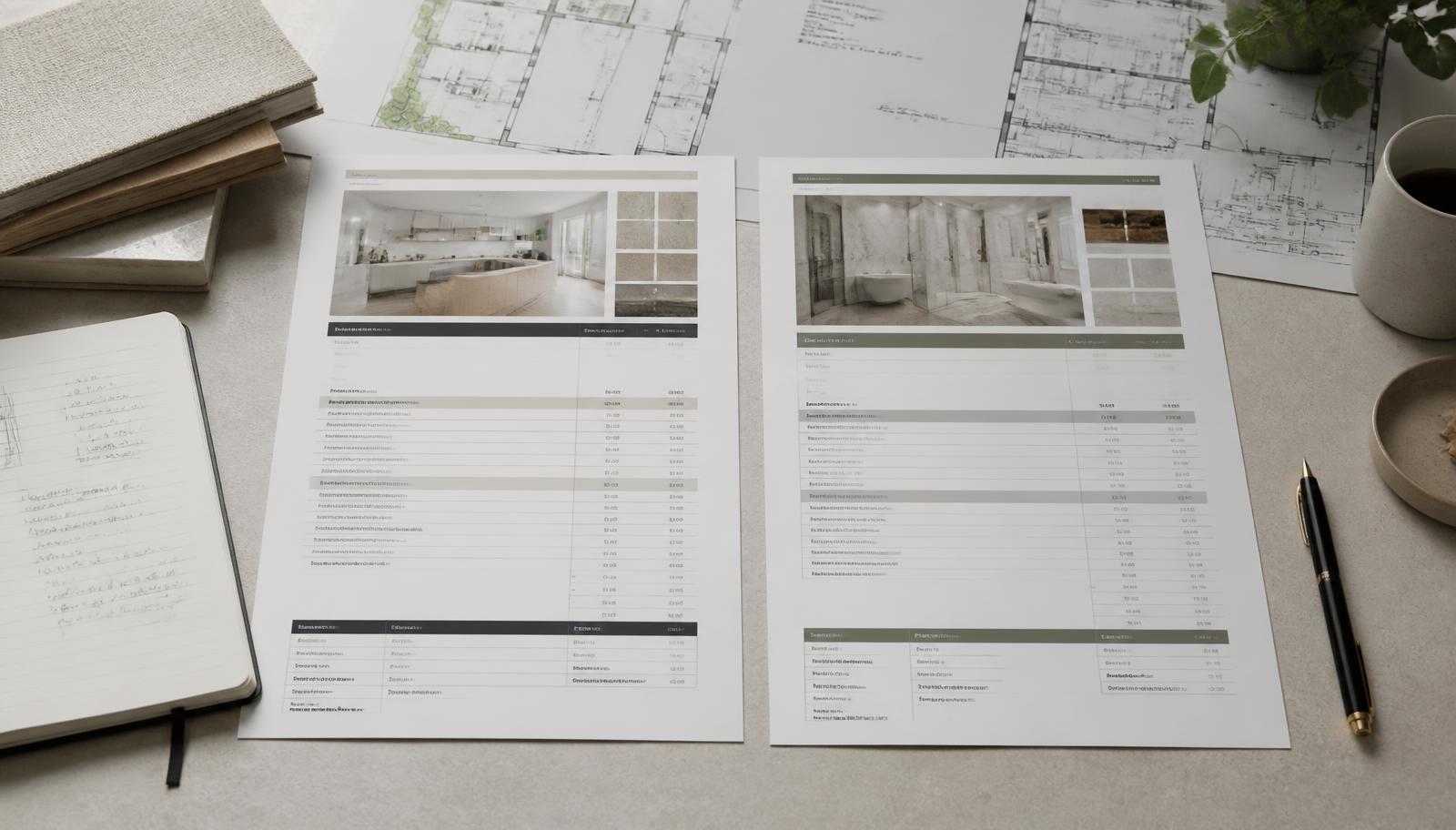
A useful quote breaks down work sections, quantities and conditions, rather than presenting only a single overall figure. This structure makes it possible to see where the cost is concentrated and makes it easier to compare proposals from different companies. To go deeper into this point, see our guide on what a renovation quote should include.
A simple principle helps avoid surprises: the price only changes when the scope changes — and always in writing. If a proposal doesn't make clear under what conditions the figure can vary, it's reasonable to ask for that clarification before proceeding.
Responsibilities
It's important to understand who coordinates the different trades involved in the project — electrics, plumbing, carpentry, among others — and who answers to the client in case of a question or problem. In a coordinated contract, the hired company takes on that role, rather than the client having to manage each team separately.
Planning
Before work begins, there should be a clear idea of the execution sequence: what happens first, what depends on what, and which decisions the client will need to make along the way. This planning doesn't eliminate the unexpected, but it reduces the likelihood of avoidable stoppages.
Communication
It's worth asking, from the outset, how and how often the company reports on progress — for example, through site visits, messages or periodic reports. The exact format can vary, but having a predictable channel is a sign of organisation.
Change management
Requests for changes are common during a project, whether decided by the client or revealed only once work has started. What sets careful management apart is recording these changes in writing, with their impact on price and timeline, before they are carried out.
Documentation, insurance and legal requirements
Depending on the nature and scale of the work, council permits, technical liability or specific insurance may apply. There's no single answer that fits every case: what applies to a small bathroom renovation may differ from what applies to work involving structural changes. It's fair to ask what documentation and cover are planned for your specific project.
Quality control
Asking how execution is monitored — for example, who checks each trade's work before moving on to the next stage — helps you understand whether there's an organised process behind the work, beyond the individual experience of each team.
Handover process
At the end of the project, there should be a joint inspection, in which the client and the company walk through the space and identify any points to correct before the handover is considered complete. This process formalises the transition from the worksite to normal use of the space.
After-care
It's reasonable to ask how follow-up works after handover, should questions arise about the work carried out. How this stage is handled says a lot about a company's seriousness over the medium term, beyond the moment the project is completed.
To learn about the scope of this service and how each project is assessed, visit our renovations page. To understand how we structure this process, see the Rigor Method.
Related guides


Frequently asked questions
Is a cheaper company always the worse choice?
Not necessarily. Price should be read together with the described scope: two quotes are only comparable when they cover exactly the same work, materials and conditions.
Is it normal to ask for references or examples of previous work?
Yes, it's a common and reasonable practice. What matters is understanding whether the type of work shown is comparable to what you're planning.
What should happen if the scope changes partway through the project?
Any change to the original scope should be recorded in writing, with its impact on price and timeline, before it is carried out.
Planning a project?
Tell us what you have in mind and send us whatever information you already have.
Request a Site Assessment