
Quotes
How to compare two construction quotes
When you ask for more than one quote for the same project, it's common for the figures to differ considerably. Comparing only the final amount often leads to the wrong decision.
Why the price alone isn't enough
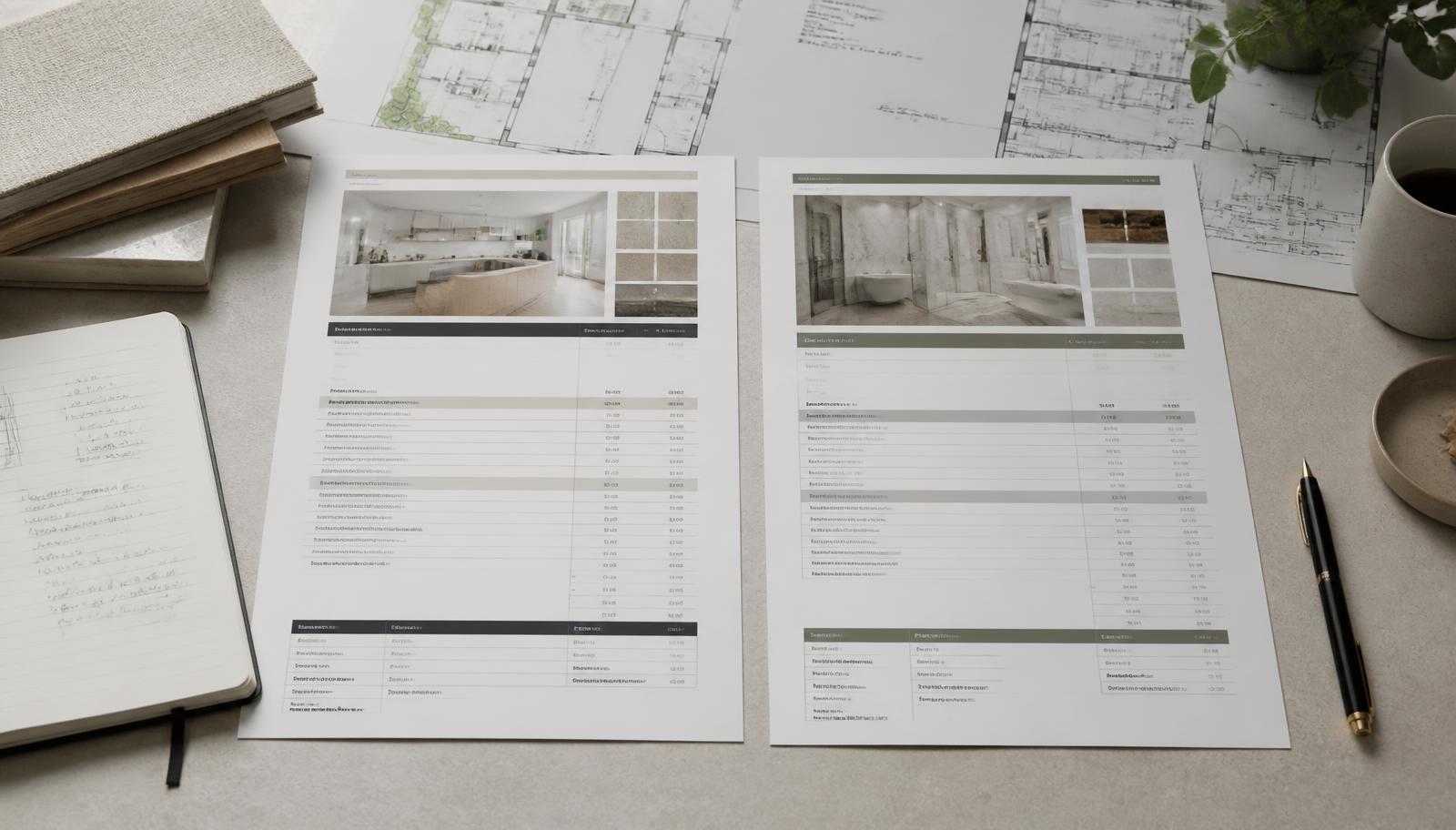
Two quotes with different figures for, supposedly, the same project rarely describe exactly the same work. The difference in price is usually explained by differences in scope, in the quantities considered, in the materials specified, or in what's left out. Comparing only the final number, without looking at what's behind it, means comparing different things as if they were the same.
Scope and quantities
The first thing to check is whether the two quotes describe exactly the same scope: the same rooms, the same work, the same quantities of material. A quote that specifies fewer square metres of flooring, or fewer electrical points, than another isn't necessarily more competitive — it may simply be allowing for less work.
Materials, inclusions and exclusions
It's important to understand which materials are specified in each quote — and what quality range they correspond to — as well as what's explicitly included and what's excluded. Items such as kitchen appliances, taps, lighting or hardware are sometimes excluded from one quote and included in another, which changes the comparison significantly.
VAT
It's worth confirming whether the figure given includes VAT or not, and at what rate. This is a simple thing to check, but it can distort the comparison between proposals considerably if it's overlooked.
Demolition and waste removal
The necessary demolition work and the removal and transport of waste from the project represent a real cost, which should be identified in the quote. The absence of this item doesn't mean the work won't happen — it may just mean it will show up as an additional cost later on.
Protection during the works
Protecting communal areas, existing flooring and elements not part of the works is a precaution that has a cost and should be allowed for, especially in buildings with shared spaces.
Electrics and plumbing
These trades deserve particular attention when comparing quotes, because the cost can vary a great deal depending on whether a full rewire/replumb, partial adaptation, or only isolated connections are planned. Confirming what each quote assumes here is essential, given how much these trades typically weigh in the total figure — as explained in our guide on what influences the cost of a renovation.
Finishes
Beyond the materials themselves, it's useful to understand the intended level of finish for each task — for example, whether wall preparation is planned before painting, or just a coat over the existing surface. These execution details affect both the result and the price.
Changes during the project
It's worth understanding, before work begins, how each proposal deals with changes that may come up. The principle we follow is clear: the price only changes when the scope changes — and always in writing. A quote that doesn't explain how changes will be handled leaves that question open, which can lead to disagreements later on.
Payment plan and estimated duration
The payment plan — tied to phases or milestones — and the estimated duration of the works are also part of a complete quote. They show not only how much the project costs, but how and when that amount is due, and what timeline is planned for the works.
Warranties and responsibilities
Finally, it's important that the quote, or the related contract, makes clear who is responsible for each part of the project and what warranties apply. This information matters as much as the figure presented, and its absence is, in itself, something worth noting.
Comparing construction quotes isn't, and shouldn't be, an exercise in picking the lowest number. It's an exercise in understanding, in as much detail as possible, what each proposal actually includes.
Related guides


Frequently asked questions
Should I always choose the cheapest quote?
Not necessarily. A lower figure may reflect a smaller scope, exclusions that only become clear later, or underestimated material quantities. A comparison is only valid when the scope of both quotes is equivalent.
Is it normal for quotes to be laid out very differently?
It's common, but it makes comparison harder. Whenever possible, it's worth asking for quotes to be broken down by trade and by item, so they can be compared item by item.
How should I handle changes that come up after the quote is finalised?
The principle to follow is simple: the price only changes when the scope changes — and always in writing. Any change should be recorded, with its impact on cost and time, before it's carried out.
Planning a project?
Tell us what you have in mind and send us whatever information you already have.
Request a Site Assessment